.png)



What Simpler Recycling changed (and what it didn't)
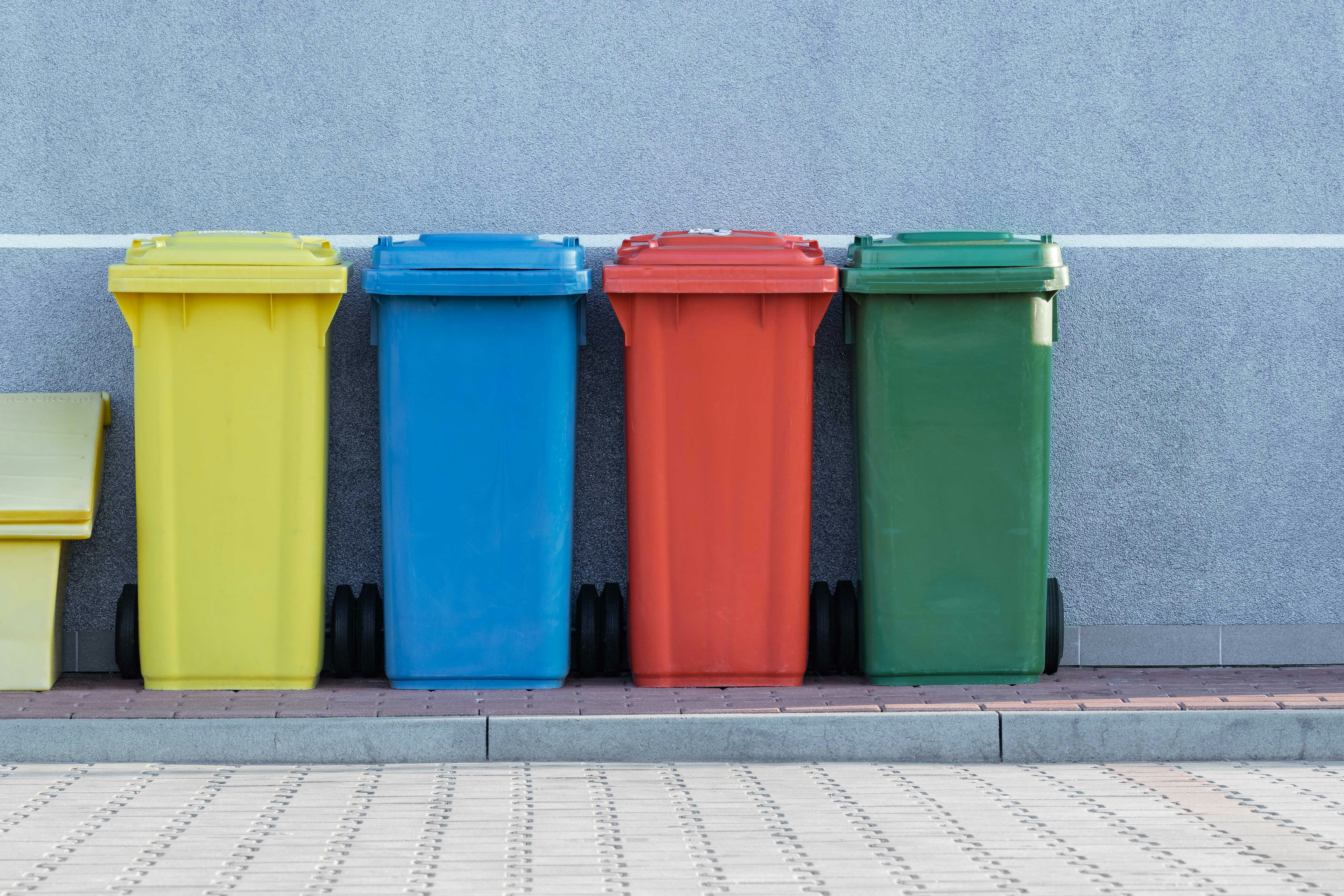
Simpler Recycling sets out clear rules for how workplaces in England separate waste. In practice, that means a few streams:
- Dry mixed recycling: paper, cardboard, plastic packaging and metal cans
- Food waste: from kitchens and break areas
- General waste (residual waste): anything that can't be recycled
- Glass waste: Glass bottles and jars
Most businesses were due to comply by 31 March 2025. However, micro-businesses with fewer than 10 full-time employees have until 31 March 2027, which is now only a few months away.
Those rules govern what you separate at your end. They don't tell you what your provider does with the waste afterwards, and that's where "zero landfill" lives.
Where zero landfill actually gets decided
You can separate everything perfectly and still have no idea where it goes. Contamination is the usual culprit. Food in the recycling bin, or the wrong items in dry mixed recycling, can lead to rejected loads and extra charges.
So, zero landfill is really two jobs:
- Your side: the right bins, set up correctly, with staff who know what goes where.
- Your provider's side: collection and processing chain that keeps waste out of landfill.
The second job is the one the customer rarely checks.
Four questions to ask any waste provider
Whichever provider you use, ask these:
- What does "zero landfill" mean in your contract?
- Where does my residual waste go? Your general waste bin is the stream most likely to end up somewhere you wouldn't choose.
- Is my collector a registered waste carrier?
- What paperwork do I get? Waste transfer notes should be in place and kept up to date.
- What happens if the collector lets me down? Missed lifts and slipping service are common complaints. Ask who fixes it, and how fast.
Here's how we answer them.
We're a broker, so we don't process waste ourselves. We place your collections with national and local providers. Our zero-landfill commitment means general waste from our network is sent to energy from waste facilities rather than landfill. That is not the same as recycling, and we won't pretend it is.
To back the claim up, we check this by provider declarations, facility details and periodic audits. If a provider isn't meeting the standard, we move you to one that does, without disrupting your collections.
Why use a broker rather than go direct?
A direct provider can only offer you its own service and its own price. We compare national and local providers, monitor service levels for you, and step in if one slips. You deal with one dedicated account manager instead of chasing a call centre.
You may not need to change providers at all.
Often, we can keep your existing supplier and move you onto our negotiated pricing.
What this looks like on site
Care homes and nurseries. Reliability and paperwork matter most in a regulated environment. With Waste & Washroom as your broker, you get a dedicated account manager who manages duty of care and all waste transfer notes. You also need to keep clinical waste, sanitary waste and sharp objects out of general waste.
Small businesses. If you prepare or serve food, you need a food waste bin which separates recycling and general waste. This is a less expensive option as well as general waste and overweights. We recommend a 240L or 360L mixed recycling bin for small sites. And, if space is tight, bagged collections are an option.
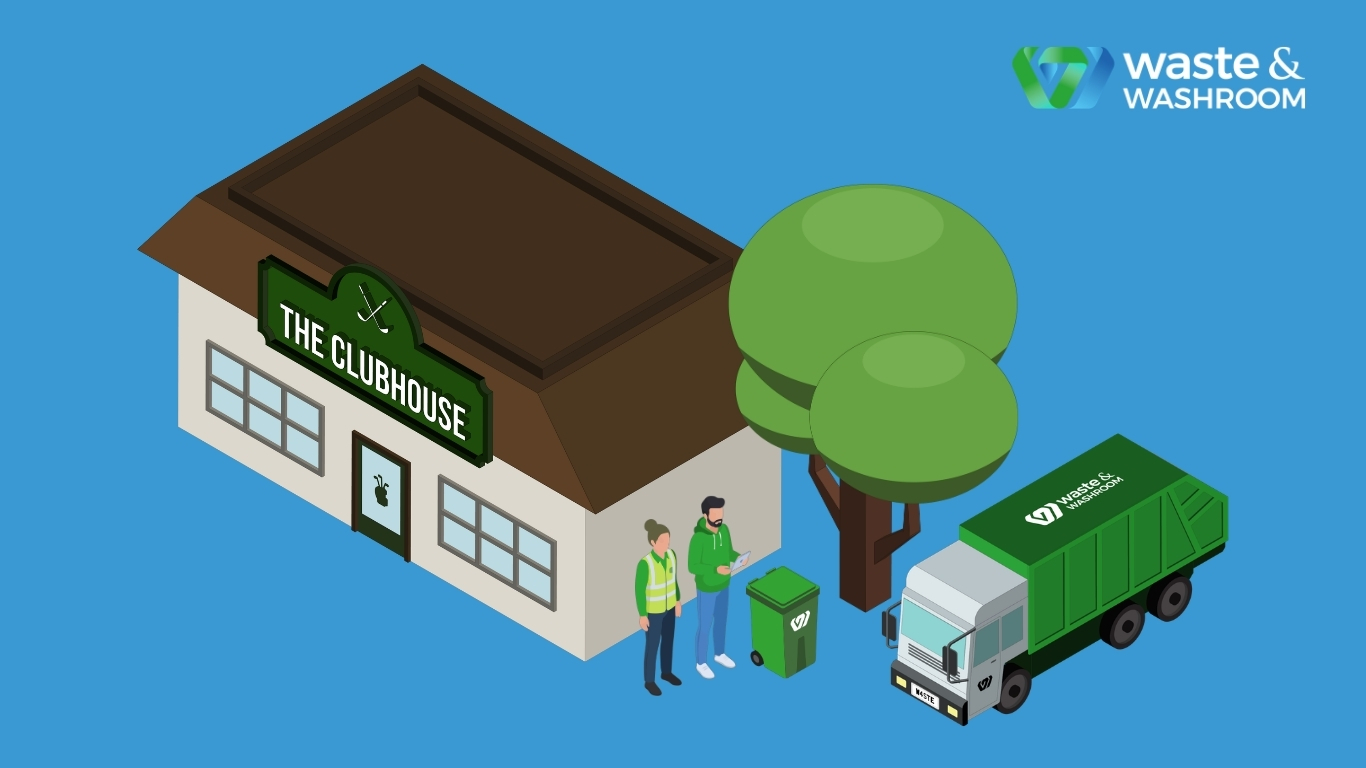
Sports clubs and Golf Clubs. Busy venues, events and changing facilities mean waste spikes at peak times. Your collection frequencies and bin sizes can be customised to suit your sports club. If your clubhouse runs a bar, glass we can arrange this as a separate collection.
Clubs we work with have seen real results:
- Holywell Golf Club saved £1,012.34 a year (34%)
- Stonehouse Bowling Club saved £1,125.56 a year
- Eddlewood Bowling Club saved £1,437.28 a year