.png)


Why Choose Waste & Washroom for General Waste?
Most businesses pay more than they should for general waste collections. They also spend far too much time chasing suppliers, sorting paperwork and dealing with problems that keep coming back. We remove all of that.
Waste & Washroom works as your waste partner, not just another provider. Because we’re a broker, we compare prices from a wide network of national and local collectors and negotiate rates that individual businesses can’t usually access on their own. In many cases, this means an immediate saving without changing your existing setup. Where possible, we can even keep your current supplier in place and move your service onto our national pricing, delivering savings straight away.
Compliance is fully handled too. We stay on top of regulations, make sure the right documentation is in place and keep your business protected. You’ll have a single point of contact who knows your account inside out, so if something needs sorting, it gets dealt with quickly and properly.
We also keep an eye on service levels throughout your contract. If collections slip or a provider stops performing, we step in and switch you to another supplier with no disruption to your business. And no matter who collects your waste, everything is processed with our zero-landfill commitment in mind.
In short: better pricing, less hassle, and a service that actually works.
How it works
Switching your general waste service is much easier than most businesses expect. Our process is simple, quick and designed to avoid any disruption to your collections.
1. Send us your current invoice
Just send over a recent invoice from your existing provider. This allows us to see exactly what you’re being charged for and match the service like-for-like.
As part of this review, we’ll also highlight any opportunities to improve your setup. If your business isn’t maximising its recycling potential, we’ll suggest practical service changes that can strengthen your environmental credentials and often reduce costs further.
No forms, no long back-and-forth — one document is all we need.
2. We compare the market for you
We check prices across our full network of national and local waste providers. Because we aren’t tied to any single supplier, we can remain completely independent and look at both cost and reliability, ensuring you’re matched with a provider that delivers a consistent service as well as a competitive price.
Most businesses see an immediate saving without changing their collection days or bin sizes. In many cases, we can even keep your existing provider in place and simply move your account onto our negotiated pricing, delivering instant savings with no disruption.
3. We handle the entire switch
If you decide to go ahead, we manage the whole process for you. We liaise with your existing supplier, take care of the transition from your current agreement, and put the new service in place so collections continue as normal — often without any visible change on site.
No downtime, no chasing, and no admin for your team to deal with.
A smoother service, a better price, and one point of contact from day one.
What is General Waste?
General Waste is the non-recyclable rubbish your business produces day-to-day. It includes anything that can’t go into mixed recycling, food waste or glass collections. Every UK business — from small shops to multi-site operations — generates this type of waste, and it must be collected by a licensed commercial provider. The council won’t collect it for free.
For most companies, General Waste covers things like:
- Low-grade plastics
- Contaminated cardboard or paper
- Mixed packaging
- Polythene and film
- Disposable PPE
- Items that can’t be recycled due to food residue or mixed materials
General Waste can’t include hazardous waste, clinical waste, WEEE, sharps, oils, solvents or food waste. These all require specialist disposal, and mixing them into General Waste can lead to fines and compliance issues.
Because businesses are legally responsible for how their waste is stored, collected and processed, it’s important that General Waste is handled correctly — with the right bins, regular collections and proper documentation. That’s where we step in, making sure everything stays compliant and hassle-free.
What Can Go in General Waste?
General Waste is the catch-all for non-recyclable material your business produces during day-to-day operations. It covers anything that can’t be recycled, composted or safely processed through other waste streams, and must be collected by a licensed commercial provider.
Here are the typical items that can go into General Waste for most UK businesses:

Low-grade and mixed plastics
Film, polythene and lightweight packaging
Contaminated cardboard or paper
Used disposable PPE (non-hazardous)
Food-soiled packaging
Broken or mixed-material items that can’t be separated
General refuse from staff, customers or public areas
What counts as General Waste will differ depending on the sector. For example:
Golf Clubs often produce mixed packaging,, contaminated cardboard, disposable cups and other non-recyclable items from the clubhouse, pro shop and course bins.
Offices may have low-grade plastics, food-soiled packaging, snack wrappers and general bin waste.
Hospitality venues usually deal with non-recyclable takeaway containers, wrappers and mixed packaging.
Just as important is what cannot go into General Waste. Putting the wrong items in this bin causes contamination, increases collection costs and can lead to compliance issues. Items that must not be placed in General Waste include:

Food waste
Glass
Batteries
Electrical items (WEEE)
Chemicals, paints and aerosols
Fluorescent tubes or lighting
Clinical or sanitary waste
Sharps
Oils, grease or hazardous materials
These require their own bins and specialist collections — all of which we can arrange as part of your service.
Keeping General Waste separated correctly helps collections run smoothly, keeps costs down, and ensures your business stays fully compliant with UK waste regulations.
General Waste Bin Sizes & Collection Options
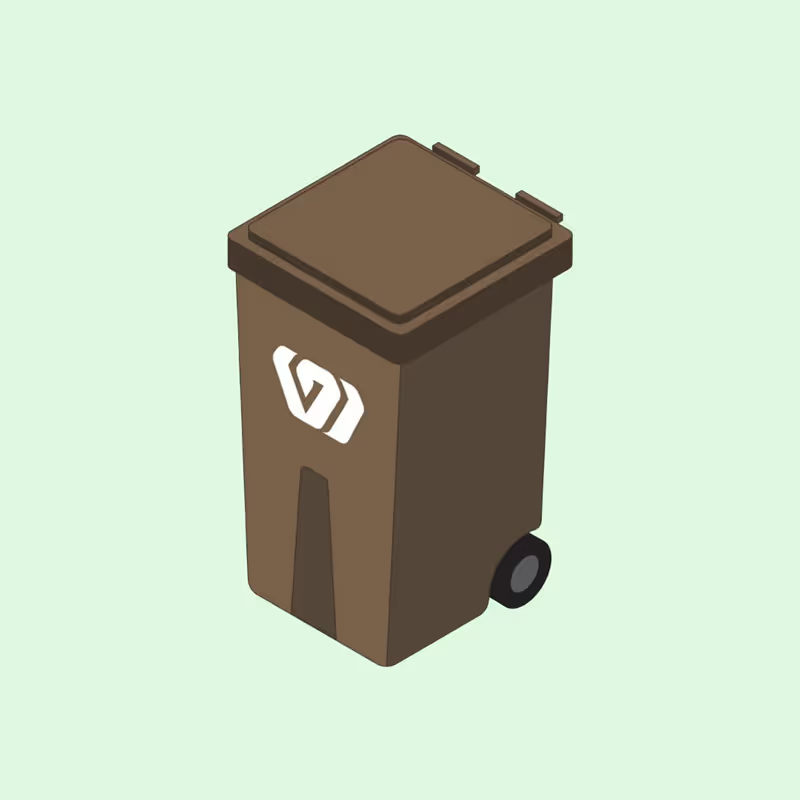
Every business produces waste differently, so having the right bin size makes a real difference to cost, compliance and collection frequency. We supply all standard commercial bin sizes for General Waste, from small 240L bins for low-volume sites to larger containers for busier operations.
Below is a quick guide to the most common options used by UK businesses.
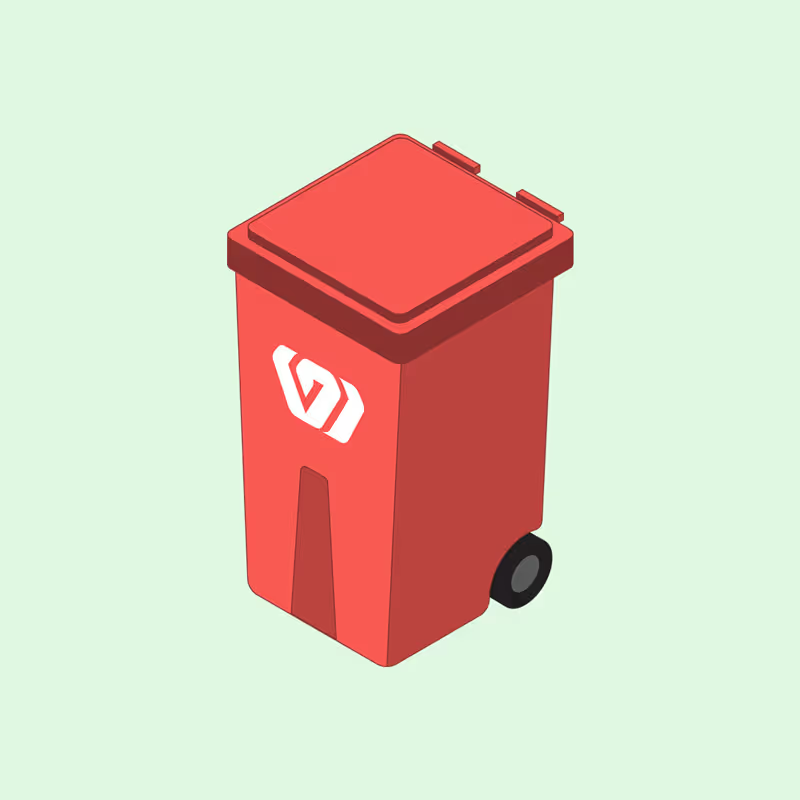
240L General Waste Bin
A good fit for smaller sites or businesses with limited space.
Typically used by: small offices, cafés, small retail units, golf club halfway houses.
Equivalent to: around 3–4 black sacks.
360L General Waste Bin
A step up in capacity without taking up much extra footprint.
Typically used by: medium-sized offices, small hospitality sites, garages and clinics.
Equivalent to: around 5–6 black sacks.
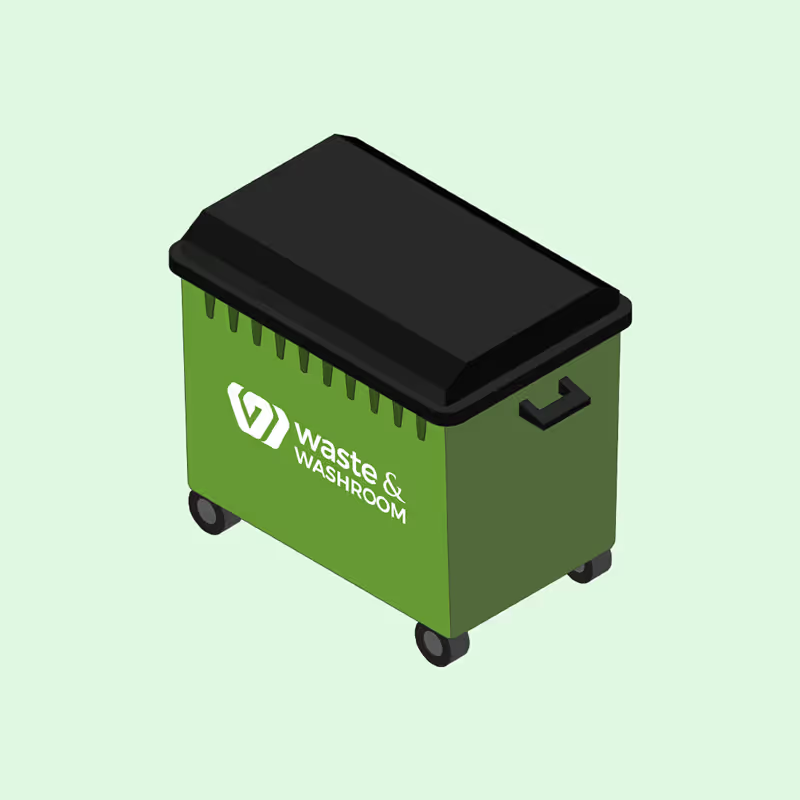
660L General Waste Bin
A popular choice for sites with steady daily waste output.
Typically used by: pubs, restaurants, gyms, multi-office buildings, golf club clubhouses.
Equivalent to: around 10–12 black sacks.
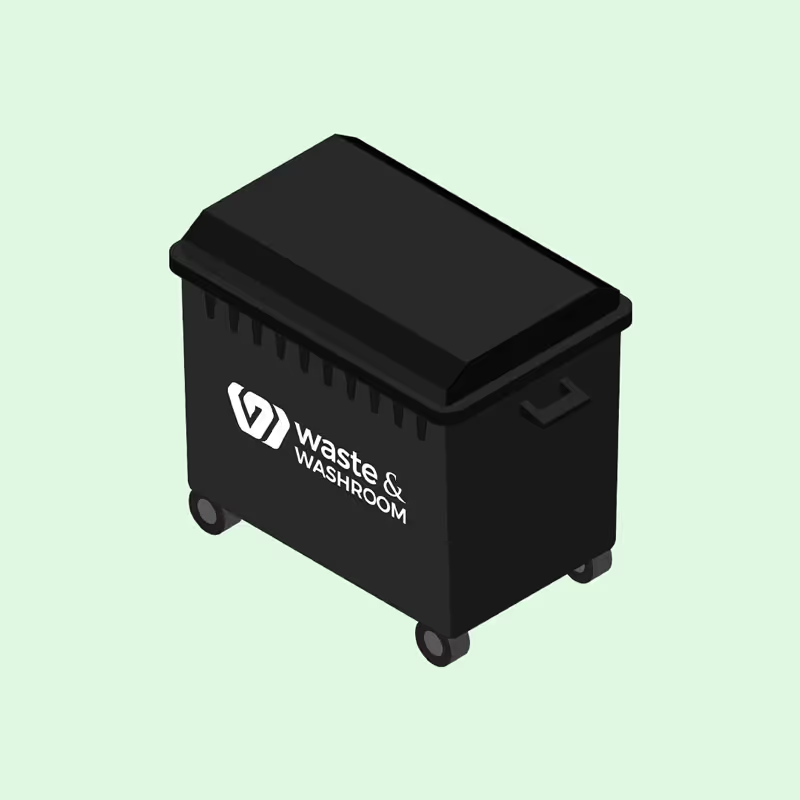
1100L General Waste Bin
The largest standard commercial bin. Ideal for high-footfall or multi-site businesses.
Typically used by: large hospitality venues, supermarkets, leisure centres, football clubs and industrial units.
Equivalent to: around 15–18 black sacks.
Collection Options
We offer flexible collection schedules to match your waste output and avoid unnecessary costs. Most businesses choose:
- Weekly collections (the most common option)
- Twice-weekly for busier sites
- Daily collections for large venues or multi-site organisations
- Ad-hoc or seasonal collections for golf clubs, sports venues, events or holiday parks
If service levels drop from a provider, we can switch your collections to another supplier with no disruption to your business.
Bin Delivery & Setup
All bins are delivered directly to your site, with no delivery cost in most cases. We match your current setup like-for-like to keep things running smoothly from day one.