.png)



If you run a business in the UK, waste collection is one of those essentials you can’t ignore. It affects cost, compliance, day-to-day operations and, in some industries, customer experience too.
At Waste & Washroom, we’ve supported thousands of UK businesses to reduce costs and simplify waste collection. Over time, the same problems keep showing up. Businesses pay more than they should, contracts roll over without review, and when service slips, people end up stuck chasing suppliers.
This guide is here to help you get clear on how business waste collection works in 2026, what your responsibilities are, what a sensible setup looks like, and where savings can usually be found.
What is business waste (commercial waste)?
Business waste, sometimes called commercial waste, is any waste produced as part of running a business. It applies to almost every type of organisation, not just large companies.
A common misconception is that business waste is collected like household waste, with the council providing a weekly collection service. In reality, councils do not collect business waste as part of business rates, and you are responsible for arranging collections through licensed providers.
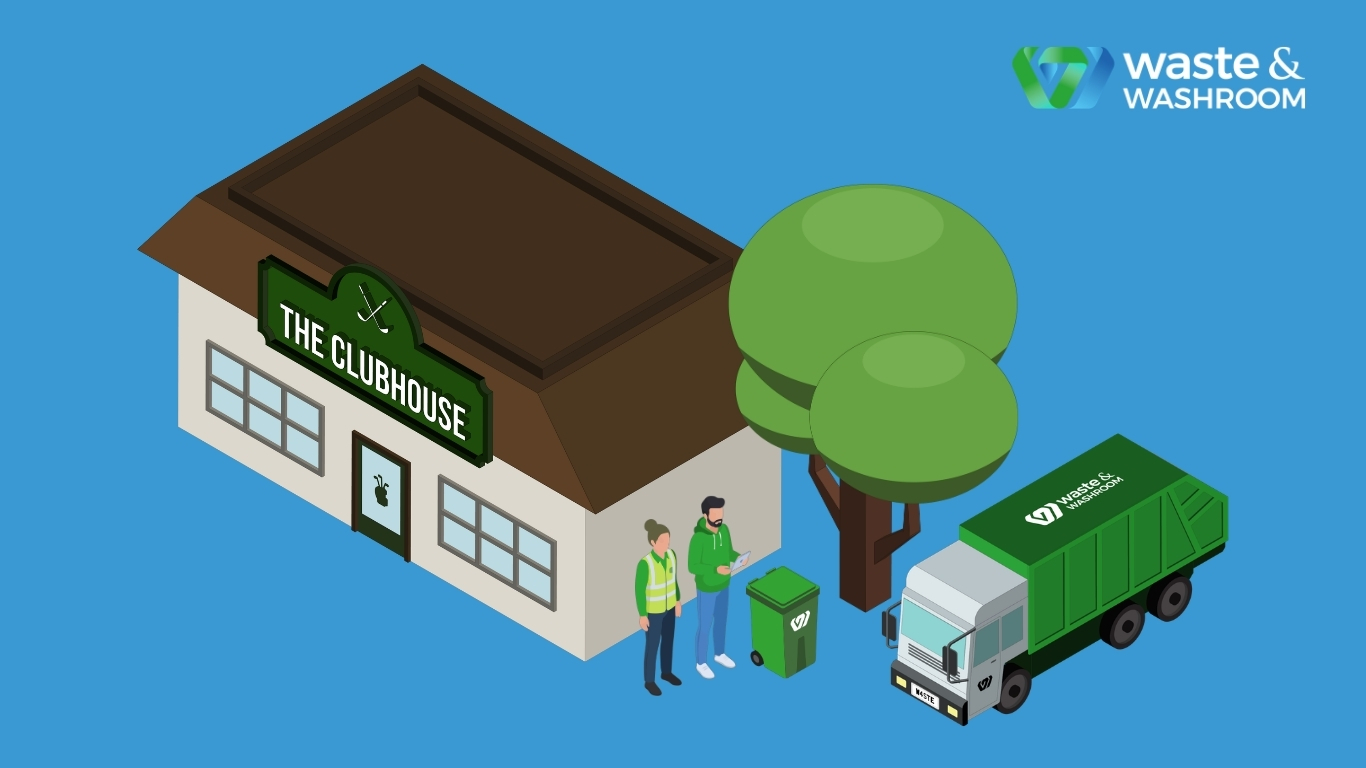
This applies to a wide range of organisations, including sole traders, charities, home-based businesses, limited companies, schools, GP surgeries, dental practices, sports clubs and multi-site operators.
Under the Environmental Protection Act 1990, businesses have a duty of care to manage their waste responsibly. In practice, that means storing waste safely, using licensed carriers, and keeping the right paperwork in place, including Waste Transfer Notes.
You can manage this directly with a provider, or work with a specialist partner who handles the whole process for you. That is the role Waste & Washroom plays. We manage collections and compliance on your behalf, and we use our buying power to secure better rates than most businesses can access alone.
Examples of business waste
Every business produces waste, but the mix is different depending on what you do day to day. Some waste streams are obvious, others get missed until there is a problem.
A retail shop might deal with cardboard, plastic wrapping and general waste from staff and customers. It may also have less obvious waste streams such as animal by-products if food is being disposed of, sharps from broken blades used to open packaging, or hazardous waste from cleaning products used on floors and surfaces.
A dental practice’s waste collection will look completely different. General waste and recycling still apply, but you may also be dealing with clinical waste, sharps, amalgam waste and confidential paperwork, all of which need specialist collections.
The reason this matters is simple. When businesses put the wrong waste in the wrong stream, collections fail, costs rise, and compliance risk increases.
How do UK businesses dispose of waste correctly?
There is more to business waste disposal than placing a bin outside and hoping it is collected.
A compliant setup usually includes:
- Using licensed waste carriers
- Segregating waste into the right streams
- Choosing bin sizes that match your volume
- Setting a realistic collection frequency
- Keeping documentation up to date, including Waste Transfer Notes
- Making sure waste is stored safely on site
If that sounds like a lot, it can be. Most businesses are not set up to manage waste compliance and supplier performance in-house.
This is one of the main reasons businesses work with Waste & Washroom. We manage the admin, we keep documentation in place, and if something goes wrong, you have one point of contact who sorts it quickly. You are not stuck chasing suppliers across multiple departments.
The main types of business waste
Most UK businesses deal with some combination of the following:
- General waste (non-recyclable everyday waste)
- Mixed recycling
- Food waste
- Glass recycling
- Confidential waste
- Sanitary Waste
- Washroom waste
- Hazardous waste
The key point is that each stream needs the right container and the right service. Getting it right keeps costs down and keeps your business protected.
Bin sizes and collection options for businesses
Most businesses are familiar with the standard wheelie bin sizes: 240L, 360L, 660L and 1100L. Those cover the majority of use cases, from smaller premises through to busy sites with steady waste output.
Some businesses need different options.
For larger sites with outdoor space, an FEL skip (front end loader) is often a better fit. These are common for industrial sites, trampoline parks and larger operators with car parks or service yards that can house them. Typical sizes include 4.1 and 6.1 cubic metre FEL units.
At the other end of the scale, some businesses do not have space for bins at all. In those cases, bagged waste services can work well. These are usually prepaid bags sold in rolls, used as needed, and collected on an agreed schedule. They suit city centre businesses like hairdressers and small premises producing general waste in lower volumes, especially where bin storage is limited.
Choosing the right setup matters more than people realise. The wrong bin size leads to overflowing waste and extra charges. Oversized bins can be an unnecessary monthly cost. A good provider will match the service to your actual waste output and adjust as your needs change through the year.
How much does business waste collection cost in the UK?
Business waste pricing depends on the waste type, bin size, collection frequency, location, and the provider’s pricing model.
This is one area where businesses often struggle, because many providers do not publish their real prices online. In practice, two businesses with the same setup can be paying very different amounts.
This is where Waste & Washroom can make an immediate difference. We compare business waste collection prices across a full network of national and local providers. Because we are not tied to any single supplier, we can remain independent and find the most competitive deal available.
In many cases, we can even keep your current provider in place and simply move your account onto our negotiated pricing. That means an immediate saving without changing collection days, bin sizes, or how your site operates.
Do commercial bins cost money?
In most cases, bins are provided as part of the collection service rather than charged separately. The ongoing cost tends to come from lifts and disposal.
There are exceptions, especially where sites need specialist containers, extra bins, or replacement due to damage. The bigger issue for most businesses is not the bin itself, it is the contract setup and whether you are paying a fair rate for the service you are receiving.
Where do you find the cheapest business waste collection prices?
Most businesses either go direct to a provider, or they compare the market using a specialist partner.
Going direct can work, but contracts are often fixed-term, renew automatically, and rarely get reviewed unless someone actively challenges pricing. Providers like Biffa, Veolia and SUEZ operate nationwide, but their best rates are not always visible to individual businesses.
Working with Waste & Washroom gives you market coverage and buying power. We see pricing across multiple providers, including national and local collectors, and we can negotiate rates that individual businesses typically cannot access.
Most importantly, we do not disappear once the contract is signed. We monitor service levels, support you with compliance, and if a provider stops performing, we can switch you to another supplier without disruption.
Managing your waste collection day to day
Waste collection is not “set and forget”. Even with a good provider, things can slip. Missed collections, contamination, inconsistent service, poor communication and paperwork issues are all common.
This is where having Waste & Washroom as the point of contact changes the experience. Instead of sitting on hold with a call centre, you have one account manager who knows your setup and sorts issues properly. It is a more reliable way to run a service that your business depends on.
Final thoughts
Business waste collection does not need to be expensive or difficult, but it does need to be set up correctly. If you are unsure whether you are paying a fair price, if your service is unreliable, or if compliance has become a headache, it is worth reviewing your current setup.
If you want a second opinion, Waste & Washroom can compare your current service against the market and show you what better pricing and smoother collections could look like. No pressure, no disruption, just clear options and practical support.